Posts

Showing posts with the label Social Science

Cultural Heritage of India | Handicraft | Art of Weaving, Embroidery and Leather Industry

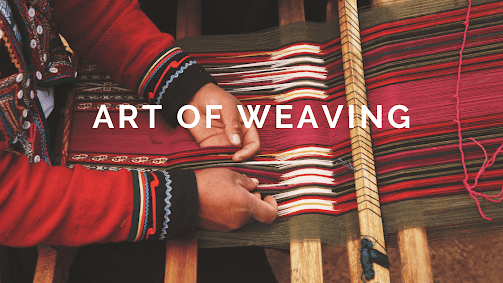
Art of  Weaving and Embroidery           Ancient India had a unique place in the fields of hand weaving, embroidery and knitting. It was said that the whole piece of cloth of a particular size (Taka) of fine muslin of Dhaka could easily pass through a ring and could be adjusted in a matchbox. Moreover 'Galicha' (carpet of several regions), knitting work on attires and artistry etc. occupied a prominent place. Amongst them are Patola of Patan (Gujarat), Bandhani of Rajasthan, kanjivaram saree and kashmiri cloth having 'Kasab' work .           During the golden period of Solanki era, Gujarat had progressed in this field. During the reign of Siddhraj Jaisingh many artisans (weavers) came and settled in Patan and made the town world famous, especially for its Patola. Some weavers of Patan were the best artists particularly of Patola of Patan. This art of Patan is more than 850 years old. Only a handful people have the skill...
Cultural Heritage of India | Handicraft | Art of Weaving, Embroidery and Leather Industry

Image
Art of  Weaving and Embroidery           Ancient India had a unique place in the fields of hand weaving, embroidery and knitting. It was said that the whole piece of cloth of a particular size (Taka) of fine muslin of Dhaka could easily pass through a ring and could be adjusted in a matchbox. Moreover 'Galicha' (carpet of several regions), knitting work on attires and artistry etc. occupied a prominent place. Amongst them are Patola of Patan (Gujarat), Bandhani of Rajasthan, kanjivaram saree and kashmiri cloth having 'Kasab' work .           During the golden period of Solanki era, Gujarat had progressed in this field. During the reign of Siddhraj Jaisingh many artisans (weavers) came and settled in Patan and made the town world famous, especially for its Patola. Some weavers of Patan were the best artists particularly of Patola of Patan. This art of Patan is more than 850 years old. Only a handful people have the skill...
Cultural Heritage of India | Handicraft | Art of Ancient Clay Work

Image
Material Heritage What is called Material Heritage?           Physical and mental characteristics that a child inherits from the parents by birth is known as 'genetic inheritance'. Whereas estates, land, properties, assets are called ' material heritage ' . Similarly whatever man obtains or creates with his intellect and skills is called Cultural heritage .           Different people have their own individual religious traditions, customs and living styles. A child inherits all these from his or her parents. Along With this, every country has its own specific heritage . As we all know, the impact of western culture has been increasing tremendously day by day. If we do not preserve our precious cultural heritage , we might lose our unique cultural identity. Once upon a time, India was called 'Sone ki Chidiya' (a golden bird). In comparison to the currency existing today, the ancient currency was more valuable. -----------------...

Preservation and Importance of Indian Cultural Heritage

Importance of Culture Heritage           As we have seen earlier, culture means whatever we possess and civilization means ' What we are' . The different aspects of this culture are handed down by one generation to the next generation to the next. They add to whatever they have learnt and at the same time teach it to the next generation. What is meant by Heritage?  Thus, whatever is inherited from generation to generation is called heritage.           The existence of human society is also indebted to cultural heritage . On the other side the existence and continuity of this culture is mutual. At the same time it is supplementary and nourishing. The culture had greatly influenced social, economical, religious and cultural aspects of human life.           Person's food, clothes, dwelling, social life, ways of expression, means of entertainment, style of communication, style of earning all ar...

Which ancient tribes have been included in India? Explain

Image
Cultural Heritage           Cultural Heritage that India has gifted to the world is also prosperous, rich and varied. Cultural heritage is man-made heritage. Whatever man obtains or creates with his intellect, skills is called cultural heritage.           The people of India, from the prehistoric period, have contributed to the people of the world. For e.g., sculpture is a 5000 years old ancient art. The remains of Indus Valley civilization is evidence of this. The remains of the figures of Gods and Goddesses, human figures, animals and several toys as well as sculptures of a man with a beard and the statue of a dancer are the examples of rich cultural heritage and their contribution to the world.           Further when we look at the bullock or lion on an inverted lotus of Mauryan Era, the statue of Gautam Buddha in a meditative mood, or the statues of Jain saints and the caves of Ajanta Ellora...

Features Included in Natural Heritage of India | Explain in detail

Image
Rich Heritage of India           India has a varied natural and cultural heritage. The main reason for this is that India is a vast nation with different geographical and physical conditions. The history of India is thousands of years old. This culture has remained a witness, to the change due to exchange of ideologies.           Many foreigners invaded India and were victorious. They settled down here and merged in the ocean of Indian culture. In this context, heritage is a precious gift from our ancestors. Heritage is natural as well as man-made. Its development has taken place along with the historic eras. On one hand, heritage is associated with place, province or region; on the other hand, it is associated with family and community. It is a special feature of the people and their identity. For more details about 'Features included in Indian cultural heritage of India', Please click the below link >> Here To make...

Features Included In Indian Cultural Heritage of India | Explain in detail

Cultural Heritage of India           Asia is the largest continent of the world in terms of area and population. And India is a large country in Asia in terms of area and population. It has a prominent place in South Asia.           India is a land of 'Sujalam' (Full of sweet water) and 'Suflam' (Full of sweet fruit and crops), and a land that has been endowed with varied heritage.           People, right from the beginning of Indus-Valley Civilization (Harappan Civilization) till today, have made our country rich and wealthy with their intellect, ability, talents and skills. Innumerable Scholars, thinkers, artists, artisans, sages,  saints, scientists and historians have contributed to the growth and development of our culture. For more details about 'Features Included In Indian Natural Heritage of India', Please click the below link >> Here           Wha...

What is mean by Human Development? Clarify the difference between Economic and Human development.

Economic and Human Development           Human development is achievable, whereas economic development is one of its important tools. Human power that is educated, trained, civilized, healthy, disciplined, dedicated, duty-bound, feeling of cooperation and partnership in development programs, awareness and consciousness as a citizen, political freedom, and self-respect are the most important property of any nation.           Any nation that has ample natural resources and materialistic wealth, but lacks high quality human wealth can never achieve a high growth rate. In a developing country, economic development cannot be achieved due to dislike for modernization, low expectation, illiteracy, lack of spirit of adventure, superstition, old beliefs, rituals and traditions, and insufficient use of natural and materialistic resources, etc. Human development is in the root of social development. Earlier human development was evaluated...

What is meant by Anti-Social Activities and Corruption? Explain in detail

Anti-Social Activities           The illegal act or behavior of a person or a group is known as antisocial activity. Antisocial act is harmful to the society in many ways. Therefore, the society and the government make special attempts to curb it. However, we find certain antisocial activities like corruption, smuggling, hoarding, black marketing, drug trafficking and smuggling of weapons done on a large scale. Now, we will try to understand in brief, corruption as an antisocial activity. Explain the term corruption?           Corruption is a global phenomenon. It is such a wide-spread evil that it is found everywhere. It hinders the progress of the State and weakens democracy. Corruption has reached its peak and it has become a world wide sensitive issue.           Corruption is the result of people's dishonesty and their illegal dealing. People misuse their status and power and hence corruption r...

What is colonialism? Which nations of Europe were involved in the colonial competition?

Rise and Growth of Colonialism           This period is also known for the important scientific inventions that led to the Industrial Revolution (1750-1850) in the whole of Europe. Major changes took place in the field of transportation. England became the pioneer of industrial revolution. England and other European nations required raw materials for the newly established industries. Markets were required for the sale of abundant production on account of Industrial Revolution. The competition that started among European nations to acquire new territories for this purpose is called colonialism. The Europeans tried to establish their supremacy over these newly conquered territories. India was also a victim of the colonization drive and became the most important colony of England. "Which Europeans came to India after the Portuguese?" To Know about it Please click the below link. >> Here           Many nations of Asia ...

Which Europeans came to India after the Portuguese? | Emergence of England In India

Emergence of England as a Super Power           During this period, major changes were taking place in Europe and America. The American colonists with the active cooperation of the French became free from the dominance of the British. The American war of independence (1776) was followed by the French Revolution (1978). The revolution in France against the French Royalty followed the principles of Liberty and Equality and was influenced by two earlier revolution - The Bloodless Revolution of England (1688) and the American War of Independence. French Revolution gave the world the famous slogan 'Liberty, Equality and Fraternity'. Later on, Napoleon Bonaparte established dictatorship in France, bringing to an end the previously established democracy. His army seized Egypt. However, the  allied forces of England and European Army defeated Napoleon (1815) after he committed the military blunder of invading Russia during severe winter. With the fal...

Twentieth Century : The World And India

          During the twentieth century the world has witnessed long term results of the research and progress made in various fields of human life. Activities of Colonialism that spread in Asia and Africa created enmity among the European powers interested in acquiring Colonies and that resulted in World War I, Russian Bolshevik revolution in Russia, and the rise of 'dictatorship' in Germany, Italy, Spain etc. and World War II, step by step, in world politics. The desire for colonialism and imperialism had shaken the entire world by use of atomic and other destructive weapons. Of course, the desire, for peace and safety manifested in hearts of mankind, gave birth to the United Nations (UN). The race of expanding spheres of influence that continued between United States of America and Soviet Russia resulted in the Cold War. There were two centers of the Cold War: Washington DC and Moscow. For Summary of Bhuto, Please click the above link 'Summary' ...

What efforts were made in exploring a new sea-route to India and who succeeded?

Contemporary Streams Of World History           Historians call the period between 1757 (Onset of the British Empire in India) and 1947 (Departure of the British from India) as the 'British Era'. These two events, separated by nearly two hundred years are crucial to understanding the Contemporary History of India. The Effort to find out a New Sea route to India           Established of trade relations with India was always important to the nations of Europe as India was well known for many commodities, which they needed. The land route used for this purpose was under the sole dominance of the Arabs. There was a great demand for the Indian commodities like spices, cloth and indigo throughout Europe. The seizure of Constantinople (Istanbul), which connected Europe and Asia through the land route, in 1453 A.D, changed the situation. The Europeans were now compelled to find a new sea route to the Eastern countries in place of the l...

What is Seasonal Employment? | Various reasons for Rural to Urban Migration | Solution

What is Seasonal Employment? Narrate various reasons for rural to urban migration and suggestion to reduce it.           The term seasonal employment refers to the practice of workers and professionals finding work during specific months of the year and being idle during the other months in which they do not have any concrete job. Two principle factors are push and pull are responsible for migration. Push factors are as following: Poverty Lack of work opportunities Unemployment and underdevelopment Poor economic condition Lack of opportunities Exhaustion of natural resources and natural calamities Scarcity of cultivated land Inequitable land distribution Low agricultural productivity etc. Pull factors attract migrant to an area destination like: Employment and higher education opportunities Higher wages facilities Better working condition.  The appalling living conditions like slums, lack of safe water, absence of sanitation, overcrowding with the at...

What are the Special Right For Women and Linguistic Minorities as per Indian Constitution

          India has adopted the guiding principles of international law and has brought forth within its Constitution, the fundamental rights and duties governing society. It has adopted a twofold structure of fundamental rights of citizens in general and women in specific.                     The Constitution under Article 15(3) provides for affirmative action in their favour. The right to life placed under Article 21 of the Constitution, constitutes a superstructure meant to protect, directly or indirectly any negation of the right to life. Few other constitutional provisions are: Special Rights For Women: Equality before law for women (Article 14). The State not to discriminate against any citizen on grounds only of religion, race, caste, sex, place of birth or any of them (Article 15(1)).  Equality of opportunity for all citizens in matters relating to employment or appointment to any of...

What are the Special Rights For Children as per Indian Constitution

Explain about Special Rights for Children in Indian Constitution The Right to an Identity (Articles 7 and 8) Children are entitled to a name, legally registered with the government, and a nationality. Further, they must have the right to an identity, in the form of a public record. This ensures national support, as well as access to social services. The Right to Health (Articles 23 and 24) Medical care, nutrition, protection from harmful habits (including drugs) and safe working environments are covered under the right to health, and articles 23 and 24 enumerate access to special care and support for children with special needs, as well as quality health care (including drinking water, nutrition, and a safe environment) respectively. The Right to Education (Article 28) Right to free primary education is critical for helping children develop discipline, life skills while finding a safe and healthy environment to nurture a child's physiological development. This includes freedom from...